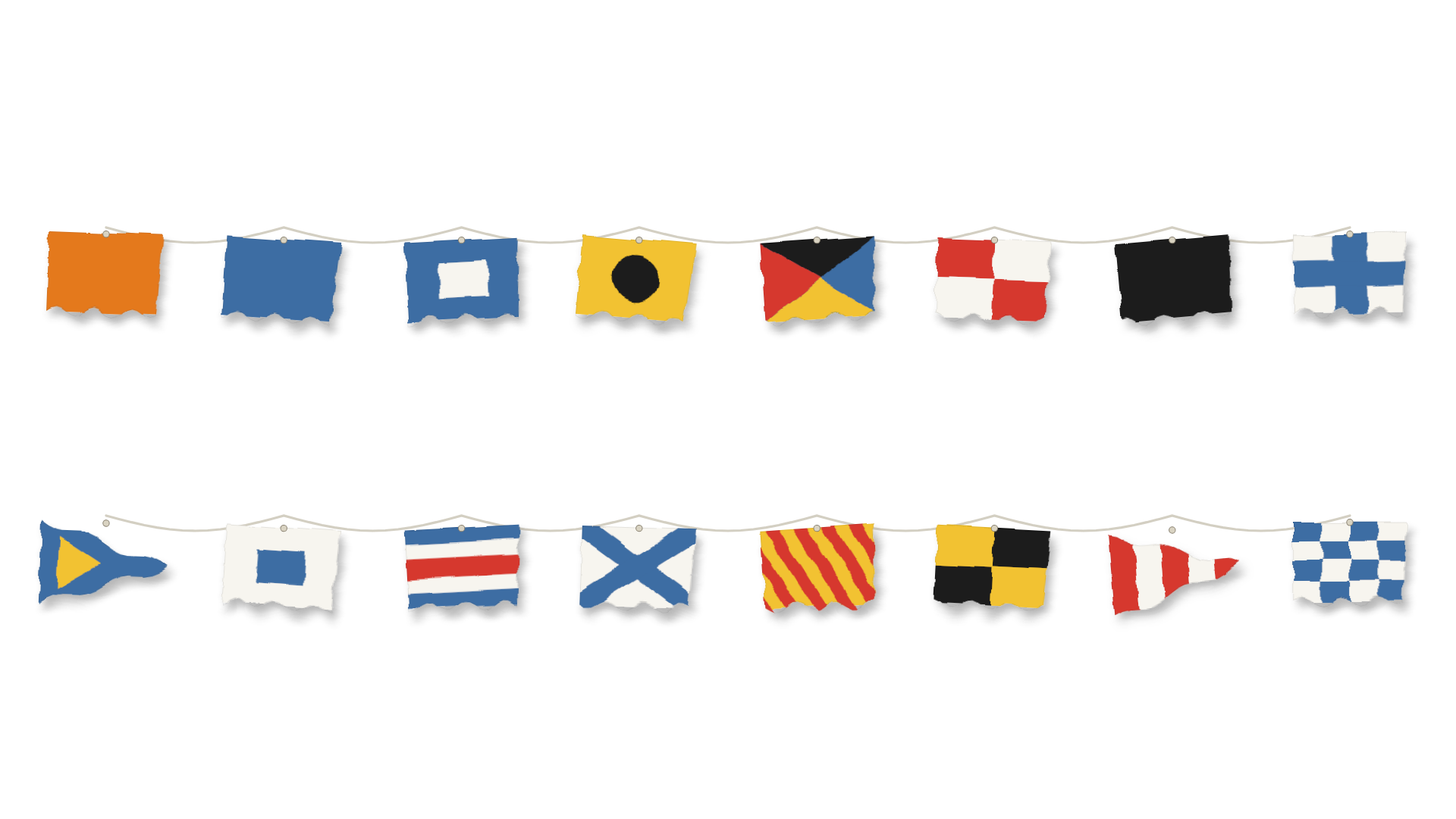
This guide explains the flags the race committee will display before and during your race. Each flag tells you something — either what to do, or a problem you need to know about.
The key rule: Times come from the visual signal (the flag), not the horn. If you miss the sound, you can still read the flag.
Before Your Race Starts: The -10 to 0 Minute Sequence
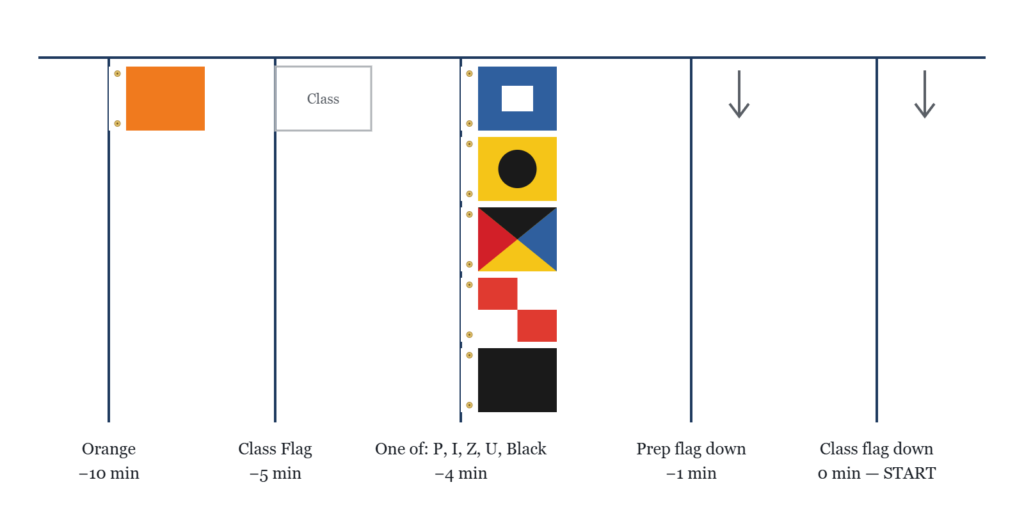
The race committee uses a countdown system. Here’s what you’ll see and when.
-10 min

-5 min
-4 min

-1 min
0 min

—10 Minutes: Orange Flag (Starting Line Marker)
What you see: A solid orange flag is hoisted, usually on the committee boat.
What it means: The starting line is set. A race is about to start. Get ready.
What you do: Start getting your boat ready — sails, rigging, crew. Head toward the starting line area.
—5 Minutes: Class Flag (Warning Signal)
What you see: Your class flag or fleet flag goes up the halyard. One horn blast.
What it means: Five minutes until the start. The official countdown has begun.
What you do:
- Final check of your sails and crew position
- Head toward the line
- Start positioning yourself in the pre-start area
- Do NOT cross the line yet
—4 Minutes: Preparatory Flag (One of Five Options)
What you see: One flag is hoisted. One horn blast.
What it means: This flag tells you which special starting rule is in effect. That rule applies during the last minute before your start – from -1 to the gun.
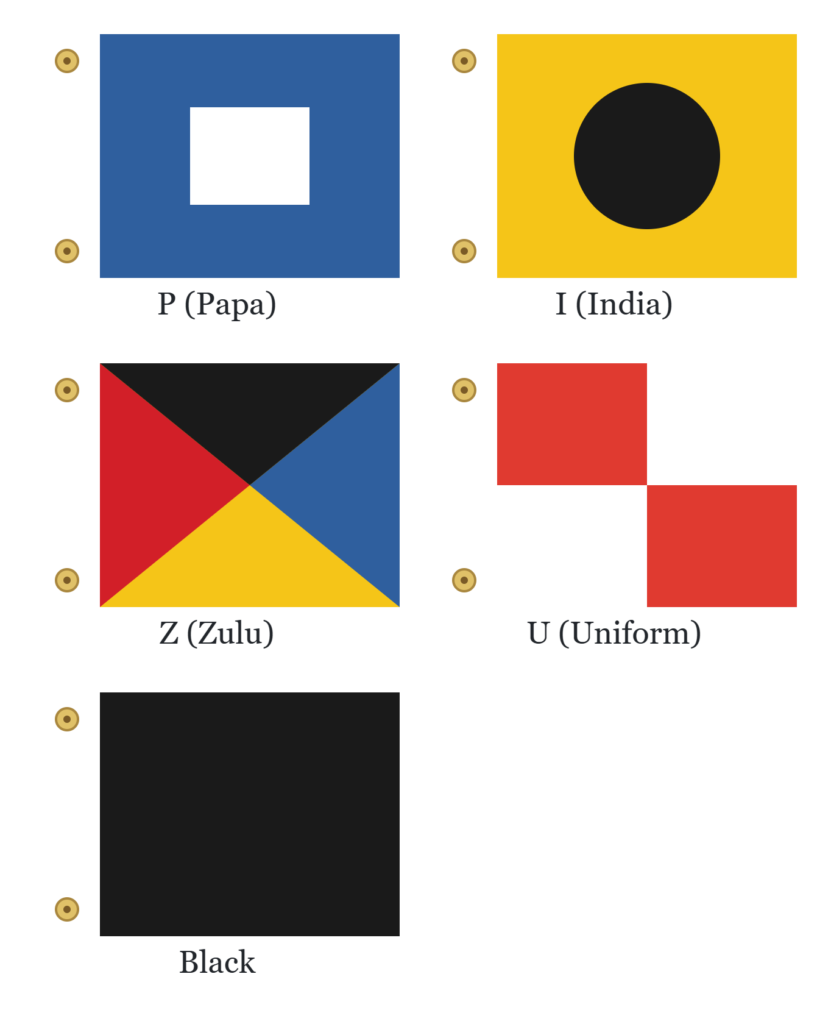
There are five possible preparatory flags. The difference between them is what happens if you’re over the line — from no consequence, to a procedural fix, to disqualification.
P Flag (Papa) — Standard Start

What it means: No special penalty rule. If you’re over the line, you’ll get an individual recall (X flag) or general recall.
What you do: Nothing different. Just get ready to start.
I Flag (India) — Round-an-End Rule
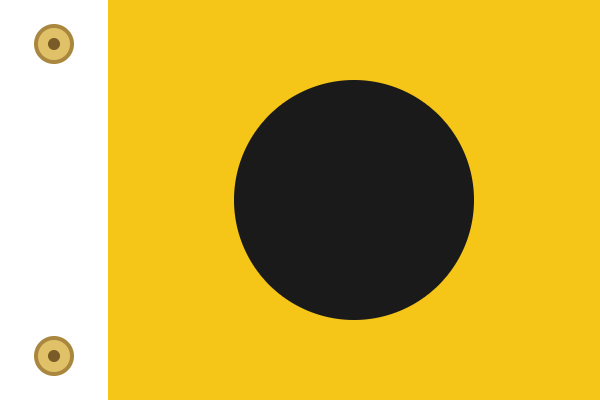
What it means: If you’re caught over the line in the last minute, you can’t just duck
straight back across the middle of the line to restart — you have to sail around one of the two ends of the line (or its extension) first.
The rule: RRS 30.1. Unlike Z, U, or Black, this isn’t a scoring or disqualification penalty – it’s a procedure. You lose distance and time getting back around the end, but you’re not thrown out or docked points for it.
What you do: If you’re over early, look for the nearer end of the line and sail around it — not through the middle — before crossing back to start correctly. Ducking back across the line anywhere else still counts as not starting properly.
Why race committees use it: It’s common on short lines with small fleets, or
after a general recall, as a middle-ground option — real consequence, but nothing on your score.
Z Flag (Zulu) — 20% Penalty Rule

What it means: If the race committee catches you in the forbidden zone (the triangle), you get an automatic 20% penalty. But you can still finish the race and score points.
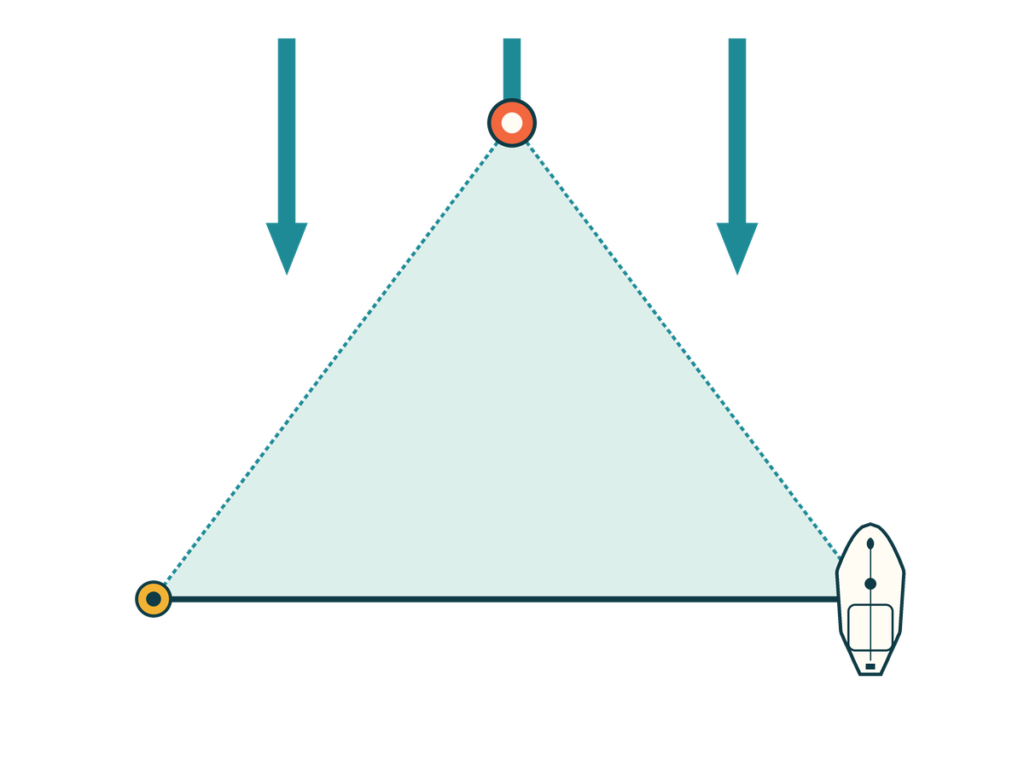
The forbidden zone: Imagine a triangle. The two ends of the starting line form the
bottom. The first mark forms the point. You cannot have any part of your hull in this
triangle during the last minute before the start.
Example: 54 boats entered. 20% is approximately 11 places. If you finish 17th, you’ll be scored 28th (17 + 11). But you don’t get thrown out of the race.
What you do: Stay completely clear of the starting line and away from where the first mark is. Stay in the pre-start area.
U Flag (Uniform) — Soft Black Flag

What it means: If the race committee catches you in the forbidden zone, you’re
disqualified from this race. But only from this race — if it restarts, you CAN sail again.
The forbidden zone: Same triangle as the Z flag.
What you do: Same as Z flag — stay clear of the starting line and the first mark area.
Black Flag — Hard Disqualification

What it means: If the race committee catches you in the forbidden zone, you’re
disqualified. And if the race restarts, you cannot sail in it. You’re out completely.
The forbidden zone: Same triangle.
Why this exists: This is the “last resort” penalty. It’s meant to stop boats that repeatedly try to sneak over the line early. The race committee only uses it after individual recalls and U flags haven’t worked.
What you do: Treat this more seriously. Stay well away from the line and the first mark during the last minute. If you see this flag, don’t take any chances.
—1 Minute: Preparatory Flag Removed (One Minute Signal)
What you see: The preparatory flag (P, I, Z, U, or Black) is taken down. One long horn blast.
What it means: One minute until the start. Final positioning time.
What you do: Get in your best position. Get your crew ready.
O Minutes: Class Flag Removed (Start Signal)
What you see: The class flag comes down. One horn blast or gun.
What it means: GO. Racing has started. You can cross the line now.
What you do:
- Cross the starting line on or after this moment (not before).
- If any part of your hull was on the course side when the starting signal happened, you have to go back and cross again (individual recall).
- Start racing.
If You’re Over the Line: Recalls
Individual Recall — X Flag

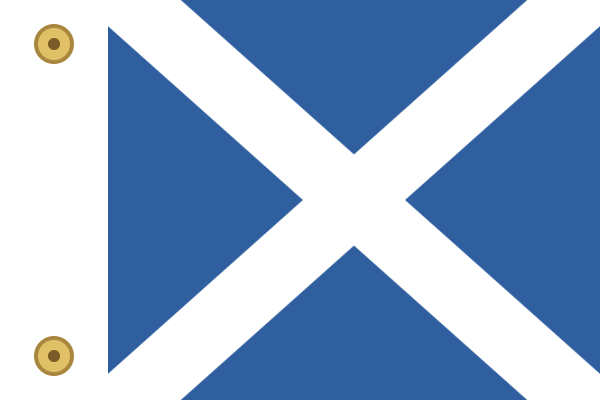
What you see: An X flag (white with a blue cross) is hoisted at the starting signal. One horn blast.
What it means: One or more boats are over the line. If it’s you, you must go back and start again.
What you do:
- If you know you were over, sail back immediately to the pre-start side.
- Cross the line again when you’re ready.
- You have until 4 minutes after the starting signal to do this.
- Do NOT keep racing. If you do, you’ll be scored OCS (over the course side), which is much worse than any other score.
How to know if it’s you: The race officer might point or signal. But if you’re not near the line, it’s probably not you. Look for obvious guidance from the committee boat.
General Recall — First Substitute
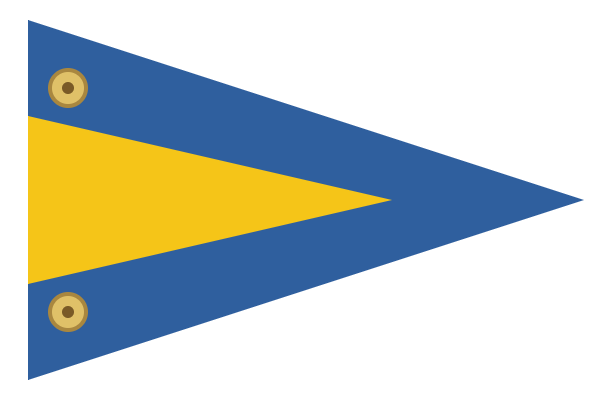
What you see: The First Substitute pennant (blue with a yellow triangle) is hoisted alone. Two horn blasts.
What it means: Too many boats were over the line. Everyone is starting over from the beginning.
What you do:
- Return to the pre-start area.
- Wait for the next warning signal (usually about 1 minute after the flags are removed).
- The entire sequence starts again: —5 (class flag), —4 (preparatory), —1 (removal), 0 (start).
Why this happens: When the race committee can’t manage individual recalls easily, or when there was an error in the starting procedure, they restart everyone. It’s actually fair — nobody gets penalized; everyone gets a fresh chance.
During the Race: Other Flags
S Flag (Sierra) — Shortened Course

What it means: The race is ending at the next mark instead of the scheduled finish line.
What you do:
- When you round that mark (the one the race committee points out), you’re finished
- Don’t sail to the original finish line
- Round the mark correctly and move on
Blue Flag — Finishing Line Marker

What it means: The blue flag marks one end of the finishing line.
What you do:
- Use it as a reference for where the finish line is
- The line extends from the blue flag to another mark
- Cross the line to finis
C Flag (Charlie) — Course Change
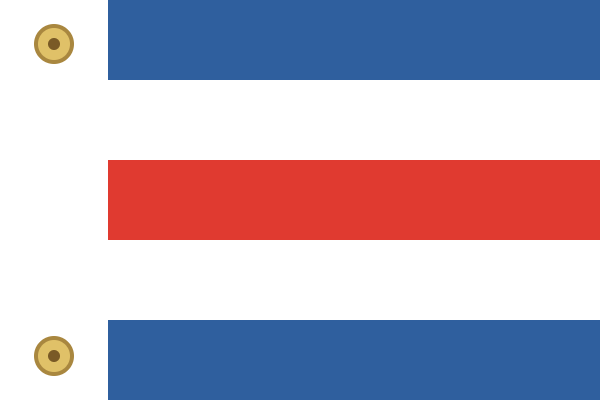
What it means: The race committee is moving the next mark. The direction or length of the next leg is changing.
What you do:
- Keep sailing to the current mark
- After you round it, sail toward the new position
- The race committee will signal the direction (green triangle = starboard, red rectangle = port) or the new length (— = shorter, + = longer)


M Flag (Mike) — Missing Mark
What it means: A course mark is missing or out of position. This object (with flag M) replaces it.
What you do:
- Treat it as if it were the real mark
- Round it on the correct side
- Keep racing
Y Flag (Yankee) — Wear a Buoyancy Aid
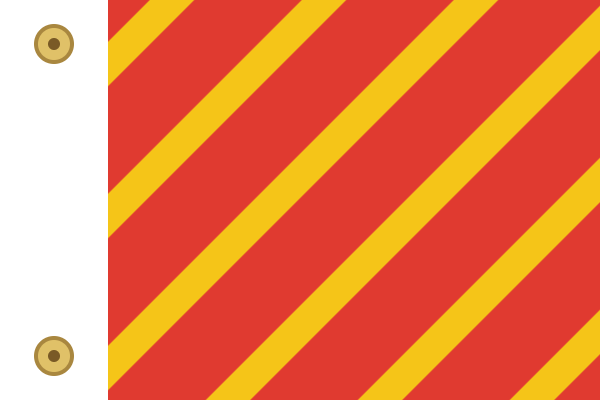
What it means: Personal flotation devices (PFDs/life jackets) are required for this race.
What you do:
- Wear your PFD
- A wet suit or dry suit alone does NOT count as a PFD
- You cannot race without one if this flag is displayed
L Flag (Lima)

What it means:
- If ashore: A notice has been posted on the official notice board
- If afloat: Come listen to the race officer or follow this vessel
What you do: Check the notice board or listen for instructions.
AP Flag (Alfa Papa) — Postponement
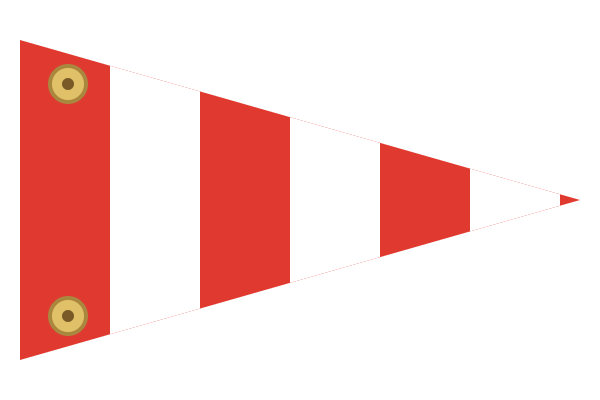
What it means: The race is delayed. It won’t start as scheduled.
What you do:
- Don’t get ready yet
- Wait for instructions (check the notice board or listen for announcements)
- You’ll get a new warning signal when the race committee is ready
AP combinations you might see stacked with it:
- AP over H — Postponed; further signals will be made ashore
- AP over A — Postponed; no more racing today
- AP over a numeral pennant (1—9) — postponed that many hours from the original start time
N Flag (November) — Abandonment

What it means: This race is cancelled. It doesn’t count.
What you do:
- Stop racing
- Return to the starting area or follow race committee instructions
- Everyone’s result is erased; the race will be resailed or skipped
N combinations you might see stacked with it:
- N over H — Abandoned; further signals will be made ashore
- N over A — Abandoned; no more racing today
Quick Reference: The Starting Sequence
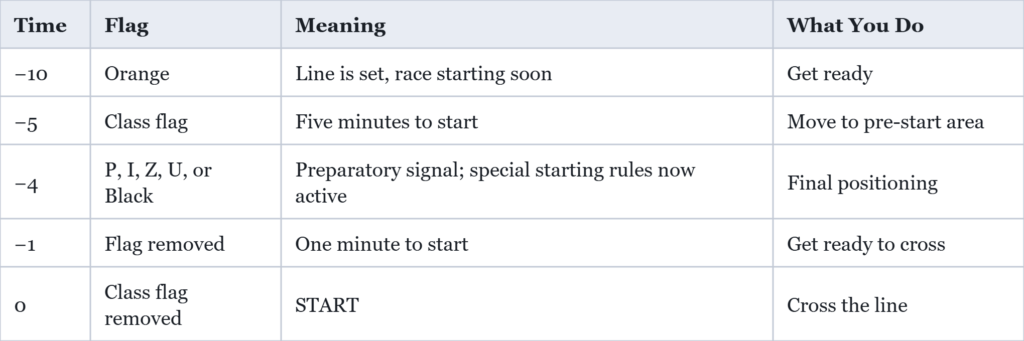
The Three Starting Penalties: What You Need to Know
Z Flag (20% Penalty)
You’re caught in the triangle – You get a 20% scoring penalty – You can still finish the race
The math. If 54 boats entered, 20% = 11 points. Finish 17th = you’re scored 28th. Harsh, but you’re still racing.
U Flag (Soft Disqualification)
You’re caught in the triangle – You’re disqualified from THIS race – You CAN sail if it restarts
If the race is restarted or resailed, you get a second chance. The disqualification only counts if the race stands.
Black Flag (Hard Disqualification)
You’re caught in the triangle – You’re disqualified – You CANNOT sail if it restarts
This is serious. If you break the rule and the race is restarted, you’re not allowed to compete.
You have to leave the racing area.
Key Things to Remember
- The flag is the official signal, not the horn. If you miss the sound, you can still read the flag.
- Timing is precise. The race committee measures time from when the flag is displayed, not when the horn sounds. Errors in timing happen sometimes — if you think one occurred, you can request redress after the race.
- The forbidden zone (Z, U, Black flags) is real. It’s the triangle formed by the two ends of the starting line and the first mark Don’t enter it during the last minute.
- Individual recall (X flag) means YOU. If it’s up and you were over the line, go back. Racing on = a terrible score.
- General recall (First Substitute) means EVERYONE No one is penalized; the whole race restarts.
- Check your notice of race and sailing instructions. Some regattas use different starting times or add extra rules. Read them before racing.
- When in doubt, ask. The race officer can clarify before the warning signal.
What Comes Next
Once you’re comfortable with these flags, you can explore:
- Sound Signals Explained — What the horns and guns mean (some signals are audio only)
- Your First Regatta — How to prepare and what to expect on race day
- The Forbidden Zone Explained — A deep dive into why the Z/U/Black flags exist and how to avoid them
- Line Bias — How the race committee sets the starting line and how you use the orange flag to read it